
·life
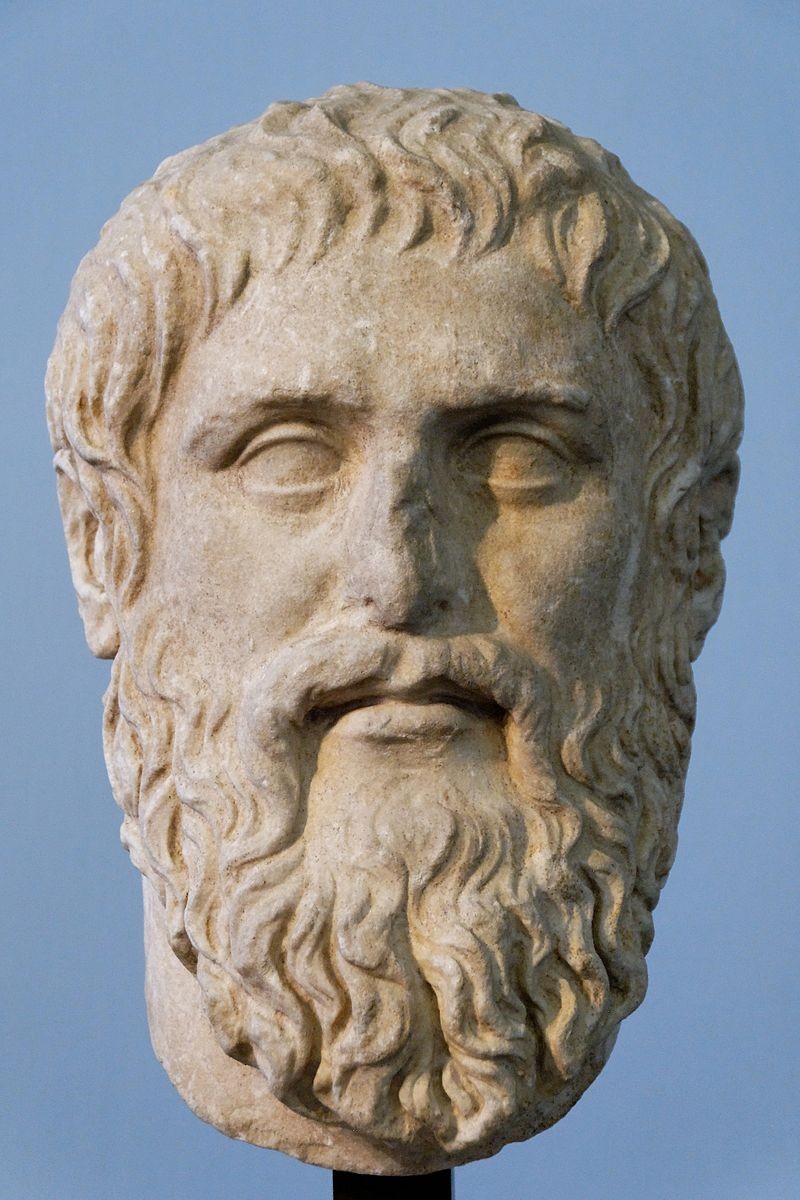 Plato is a philosopher, as well asmathematician, in Classical Greece. He is considered an essential figure in thedevelopment of philosophy, especially the Western tradition, and he founded theAcademy in Athens, the first institution of higher learning in the Westernworld. Along with his teacher Socrates and his most famous student, Aristotle,Plato laid the foundations of Western philosophy and science.
Plato's dialogues have been used to teach arange of subjects, including philosophy, logic, ethics, rhetoric, religion andmathematics. His lasting themes include Platonic love, the theory of forms, thefive regimes, and innate knowledge, among others. His theory of forms launcheda unique perspective on abstract objects, and led to a school of thought calledPlatonism. Plato's writings have been published in several fashions; this hasled to several conventions regarding the naming and referencing of Plato'stexts.
Plato and Socrates
The precise relationship between Plato andSocrates remains an area of contention among scholars. Plato makes it clear inhis Apology of Socrates, which he was a devoted young follower of Socrates.
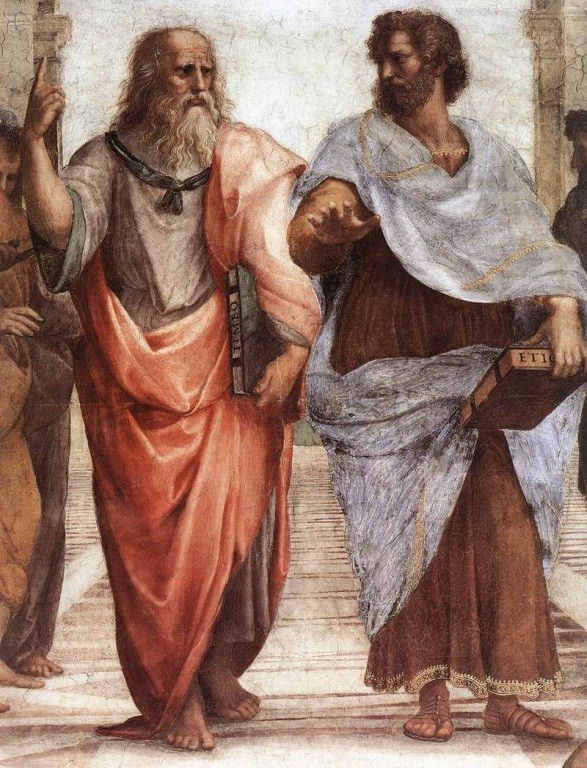
Plato never speaks in his own voice in hisdialogues. In the Second Letter, it says, "no writing of Plato exists orever will exist, but those now said to be his are those of a Socrates becomebeautiful and new" ; if the Letter is Plato's, the final qualificationseems to call into question the dialogues' historical fidelity. In any case,Xenophon and Aristophanes seem to present a somewhat different portrait ofSocrates from the one Plato paints. Some have called attention to the problemof taking Plato's Socrates to be his mouthpiece, given Socrates' reputation forirony and the dramatic nature of the dialogue form.
Aristotle attributes a different doctrinewith respect to the Ideas to Plato and Socrates (Metaphysics 987b1–11). Puttingit in a nutshell, Aristotle merely suggests that Socrates' idea of forms can bediscovered through investigation of the natural world, unlike Plato's Formsthat exist beyond and outside the ordinary range of human understanding.

