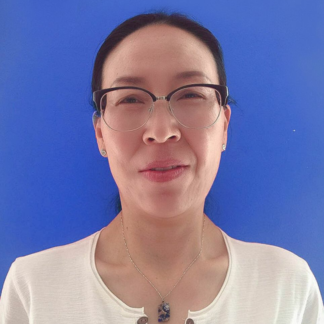
职称:副教授
单位:河海大学
部门:机电工程学院图学教研室
职位:教研室主任
主讲教师:康兰
教师团队:共4位
| 学校: | 河海大学 |
| 开课院系: | 机电工程学院(常州) |
| 课程编号: | ZJ0550082 |
| 学分: | 2 |
| 课时: | 32 |
Basically the course contains 8 chapters as shown in the syllabus; different periods are distributed to different chapters. 3D printing will be taught by doctor and associate professor Tong Jing, he is from things of Internet College, 3D printing is one of his research interests. By the end of this course, Petros Koronidis, a very experienced senior engineer and the director of R&D department from Suzhou Diao elevator company, will demonstrate a comprehensive case study according to his design experiences on several projects, showing students how to use CAD/CAM/CAE technology to design products. The rest parts will be taught by associate professor Kang Lan, by the end of part 3: Mathematicsbehind free-form curves and surfaces, TA will introduce Matlab to students.
The teaching team is made up of teachers with multidisciplinary and cross-cultural background. The purpose is to unite inside and outside school experts and resources in CAD/CAM course as a teaching team, so that students can benefit more.
Besides in-class lessons, online lessons are provided too. Other extrachapters from chapter 7 to 11 are provided on the online course. If students want to study these chapters, please use them as references or guidelines.
How to foster student’s problem solving skills? Engineers are problem solvers, and also problem creators. They are supposed to find problems first, even create problems, and then try to find solutions to the problems. So their professional responsibilities are to design products or gadgets to make our life easy, safe and comfortable. So for engineering students, learning by doing is always the best method. That’s the reason why course projects are assigned in this course and the grade of that accounts for a large proportion.
Of course, homework is a must task for every student in this course.
Notice that there is about two periods of seminars. During seminars,students are expected to give in-class presentations and discussion according to course projects.
For seminars, considering the number of students as well as limited in-class time, not all students have chances togive the in-class presentation. Teachers will select several students who do well on their course projects to give presentations. The rest of the students, of course, should also provide their presentation documents as references to the teacher, so that students’work can be graded.
So basically our teaching strategies are as follows:
In-class lectures + online course + homework + course project + presentation+ seminars
P.S: The teaching plan is flexible, during teaching process, sometimes teachers have to adjust the teaching contents, tailoring teaching materials to students’ education level.